
Process Plant Design and Construction Phases
Whether you’re developing or expanding an industrial plant, the process plant design and construction consultant brings value to your project. We achieve this by combining process plant design and construction with optimisation in Australia. Combining experience in a wide range of sectors and applications with thorough knowledge, the process plant design and construction consultant should build a solution that satisfies your budget and deadline. Engineering plays a crucial role in process plant design and construction, as well as performance evaluations, ensuring that all technical aspects are meticulously planned and executed.
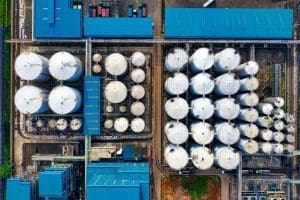
As a leading process plant design and construction consultant in Australia, SAROM GLOBAL’s expertise in process plant design and construction is complemented by a unique modular approach. Coordinating the whole span of the project, from equipment selection to construction management, is a difficult process in which we excel. Flow diagrams (PFDs) are essential in the study phase of process plant design and construction, providing a detailed representation of the operation, including the flow of materials and energy. SAROM GLOBAL’s highly experienced engineers and leadership ensure that every detail meets or exceeds your expectations, from pipe specs on every P&ID to manageing subcontractors. With over 35 years of experience in quality management, SAROM GLOBAL has successfully executed process plant design and construction projects worldwide, working with various stakeholders such as consultants, contractors, and owner organisations.
When compared to standard building schedules, SAROM GLOBAL’s process plant design tactics save an average of 24 per cent time. With our approach to process plant design and construction, your facility will be able to produce products sooner and at a lower cost.
Process Plant Construction: Design and Phase
To begin, the process plant design and construction consultants will fully extract the project scope, identify potential challenges, and produce an in-depth project timeline. This is the first and most important step in process plant design and construction, especially for those with extensive experience in managing such projects.
The majority of businesses provide a basic quote that does not guarantee project success. According to an ideal process plant design and construction business, engineering detail is very crucial at the beginning of the project. A company that specialises in industrial plant process design and engineering puts in the necessary work upfront to deliver accurate preliminary pricing and a design that you can trust. A comprehensive handbook introduces engineers to the detailed engineering and quality management practices necessary for process plant design and construction success.
Companies often offer three levels of front-end engineering with each step demanding more engineering but yielding increasingly precise results. Quotes from the Rough Order of Magnitude (ROM) include:
-
- The basic scope of the project
- Boundary limits
- +/-50% ROM Quote
- Refined Quotation
- +/- 15-5% estimate
- Project timeline
- Basic P&ID’s
- Equipment, instrument and valve list depending on financial quotes
- Fixed Bid Quotes
Price to deliver the project (the fixed bid price)
- Project timeline
- Basic P&ID’s
- Equipment, valve list and instrumentation based on exact details
- Quotation peer review
- Technical review
- Additional customer-specified documents
Step 2: Detailed Process Plant Design
The first step in detailed design is to tighten up your project’s numbers and scope. Manageing a process plant constructions site requires structured approaches and specialised knowledge to ensure effective oversight during this phase. Quality management is crucial in this phase to ensure that the detailed design meets all necessary standards and specifications. Once a set bid price has been established, the following sequence of events will occur:
- Re-evaluation in order to save even more time and money
- Set important project deadlines and milestones.
Complete the modular industrial plant design, which includes:
- Automation of processes
- Design of mechanical and structural components for process plants
- PFD’s
- P&ID’s
- Details of the foundation
- Planning for shipment constraints
- Models in 2D and 3D
- System development in CAD
- Any process modelling that needs to be done
- Improvements to the drawing
- Auxiliary perspectives
- Elevation drawings in great detail
- Detailed Plan illustrations
- Specimens of general equipment and arrangements
- Isometric illustration
Appendices covering civil works, which inform non-specialists about the nature of works expected on-site, the involved parties, and quality issues
Step 3: Equipment Procurement in Process Plant Design and Construction
The equipment for your project is ordered once the plant design engineers have completed comprehensive engineering. In process plant design and construction, project managers play a crucial role in overseeing procurement and ensuring quality standards are met. Long-lead-time equipment, as well as equipment that is critical to project milestones, is ordered first. Equipment is chosen based on the lowest overall lifetime cost rather than the lowest initial cost.
Side Step: Plant Safety and Failure Analysis in Australia
If your method demands safety and failure analysis in Australia, it will be carried out during the drafting phase of process plant design and construction. A building engineer plays a crucial role in ensuring safety standards are met during this phase. The duration of the project is determined by your availability and the information required to finish the design.
Step 4: Industrial Plant Construction
In a modernised fabrication plant, industrial plants are built. Ensuring satisfactory construction completion is crucial to meeting all quality and timeline requirements. The controlled, production-style setting results in a shorter build timetable, greater quality construction, and cheaper total modular fabrication costs. Plants should be built-in shops as modules while site improvements take place at your manufacturing facility, so parallel field enhancements occur at the same time as industrial plant development without interfering with each other.
Process Plant Construction Site Preparation
Process plant construction site preparation is a critical phase that sets the stage for a successful project. It involves a series of activities that ensure the site is ready for construction, including:
- Site clearing and excavation
- Grading and levelling
- Installation of utilities such as water, electricity, and telecommunications
- Construction of access roads and parking areas
- Installation of site offices and amenities
A well-prepared construction site is essential for ensuring the safety of workers, preventing delays, and reducing costs. It also helps to ensure that the build phase of process plant design and construction is carried out in an efficient and organised manner. Proper site preparation lays the groundwork for a smooth and successful plant construction, ensuring that all subsequent phases proceed without unnecessary interruptions.
Global Project Management
Global project management is a cornerstone of successful process plant design and construction, involving the intricate coordination of multiple stakeholders, contractors, and suppliers across various locations and time zones. Effective global project management hinges on a deep understanding of the project scope, timelines, and budget, coupled with the ability to communicate seamlessly with all involved parties.
In process plant design and construction, global project management encompasses the oversight of engineering, procurement, building, and commissioning phases. It also ensures compliance with all regulatory and safety requirements. This multifaceted task demands a high degree of collabouration between engineering, procurement, construction, and operations teams.
To achieve success in global project management, process plant construction companies must establish a robust project management framework. This framework should outline clear goals, objectives, and timelines. Additionally, having a team of experienced project managers is crucial. These professionals are adept at coordinating and manageing the diverse aspects of the project, ensuring that every phase aligns with the overall project scope and objectives.
Step 5: Installation and Commissioning
Modules are fully FAT tested and sent to your location for installation once off-site fabrication within process plant design and construction is complete. Satisfactory construction completion leading to turnover is crucial in ensuring the project is ready for operation. Your new production facility will be installed by experts in process plant design and construction, who will ensure it is mechanically and electrically integrated into your business. The punch-list, process hookups, and functional testing have all been finished and resolved. Your plant operators will receive comprehensive training on the entire system.
Contact us SAROM GLOBAL info@saromglobal.com
Process Plant Construction Site Operations
Site operations are the heartbeat of any process plant design and construction project, involving the meticulous day-to-day management of the site. This includes the coordination of contractors, suppliers, and labour to ensure that all activities are executed according to the project plan.
Effective management of a process plant construction site requires a high degree of organization and coordination. The site manager plays a pivotal role, ensuring that all safety protocols are strictly followed and that the site is well-maintained. This role demands strong communication and leadership skills to manage multiple contractors and suppliers efficiently.
Beyond the operational aspects, the site manager is also responsible for manageing the environmental impact of the construction site. This includes implementing waste management practices and minimising the site’s carbon footprint. By maintaining a well-organised and safe construction site, the project can proceed smoothly, reducing the risk of delays and ensuring that the plant construction is completed on time and within budget.
Step 6: Start-up and Operations
The start-up and operations phase is a critical stage in the process plant construction project. It involves the commissioning of the plant, testing of equipment, and training of personnel. The goal of this phase is to ensure that the plant is operating safely and efficiently, and that it is producing the desired products.
During this phase, the construction team will:
- Commission the plant and test equipment
- Train personnel on the operation and maintenance of the plant
- Develop and implement operating procedures
- Conduct safety training and drills
- Monitor and optimise plant performance
The start-up and operations phase are crucial as it sets the stage for the long-term success of the plant. It requires careful planning, coordination, and execution to ensure that the plant is operating safely and efficiently. This phase ensures that all systems are functioning correctly and that the plant is ready to begin full-scale production.
Step 7: Maintenance and Optimization
In process plant design and construction, the maintenance and optimisation phase is ongoing, involving the regular upkeep of the facility as well as the identification of opportunities for improvement. The goal of this phase is to ensure that the plant is operating at optimal levels, and that it is producing the desired products safely and efficiently.
During this phase, the maintenance team will:
- Develop and implement a maintenance schedule
- Conduct regular maintenance and repairs
- Monitor and analyse plant performance data
- Identify opportunities for improvement and implement changes
- Develop and implement training programs for personnel
The maintenance and optimisation phase is an essential part of any process plant design and construction project, as it helps to ensure that the facility is operating safely and efficiently over the long term. It requires careful planning, coordination, and execution to ensure that the plant is operating at optimal levels. Continuous monitoring and improvement are key to maintaining high performance and ensuring the longevity of the plant.
Step 8: Project Completion and Handover
The final step in the process plant design and construction journey is the project completion and handover phase. This critical stage ensures that the plant is fully constructed, commissioned, and meets all regulatory and safety requirements.
During this phase, the construction team must verify that all systems are fully functional and that all testing and commissioning activities have been successfully completed. Comprehensive documentation, including operating manuals and maintenance records, must be finalised and handed over.
Concluding process plant design and construction, the handover involves transferring the facility to the operations team, who will be responsible for its day-to-day operation and maintenance. Ensuring that the operations team is thoroughly trained and equipped to manage the plant safely and efficiently is paramount. This phase requires a high degree of coordination and collabouration between the construction team, the operations team, and other stakeholders to ensure a smooth transition.
The project completion and handover phase are vital for ensuring that the process plant is built to the required standards and operates safely and efficiently. It marks the culmination of process plant design and construction and the beginning of the facility’s operational life, setting the stage for its long-term success.